The Power of Circle: Why Women Gathering Together Is Deeply Healing
What is the ancient tradition of circle?
Across cultures and centuries, people have gathered in circles to share stories, mark transitions and support one another through the rhythms of life. The circle is one of the oldest forms of human gathering. Around fires, in homes, temples and natural landscapes, people sat in circles to ensure that everyone could be seen and heard equally. Many Indigenous cultures used circles for storytelling, ceremony and decision making. Women's gatherings have also long existed as spaces for sharing wisdom, supporting one another through life transitions, and strengthening community bonds. The shape of the circle itself carries meaning. No one sits at the head. There is no hierarchy. Each person holds equal presence within the space. Even today, the circle continues to resonate because it reflects something deeply human. We are not meant to move through life alone.
Why does sharing and witnessing matter?
One of the most powerful elements of circle is the experience of being heard without interruption or judgement. In everyday conversation we often rush to respond, offer advice or solve problems. Circle invites something different. Participants are encouraged to listen deeply and speak honestly from their own experience. Being witnessed in this way can be deeply affirming. When someone shares something personal and is met with presence rather than analysis, it creates a sense of safety. People often discover that others in the group are feeling similar emotions or navigating similar life questions. This shared understanding can dissolve feelings of isolation and replace them with connection.
The simple act of speaking and being heard can bring surprising relief.
What does psychology say about connection and healing?
Modern research increasingly confirms what communities have understood for generations. Human beings regulate emotionally and physically through connection with others. Studies in social neuroscience show that supportive relationships help regulate the nervous system and reduce stress responses in the body. Feeling socially connected is associated with lower levels of anxiety and improved emotional wellbeing. Research on group therapy has also demonstrated that shared experiences within groups can reduce feelings of isolation and support emotional processing. Additionally, research into social support and health shows that strong social connections are linked to better mental and physical health outcomes
When people gather in safe and supportive environments, the nervous system begins to settle. This creates the conditions for reflection, insight and healing. Circles provide a simple but powerful structure for this type of connection to occur.
How can circle support emotional and personal healing?
Circles combine several powerful elements that support growth and healing.
They create belonging, reminding people that they are not alone in their experiences.
They encourage expression, giving space for emotions and thoughts to be spoken aloud rather than held internally.
They invite reflection, as hearing the stories of others often helps us see our own lives more clearly.
Many people leave circle spaces feeling lighter, more understood and more connected to themselves. The process is often gentle rather than dramatic. Small insights emerge. Perspectives shift. Something softens. Over time, these small shifts can be deeply meaningful.
Why do circles feel especially powerful on retreats?
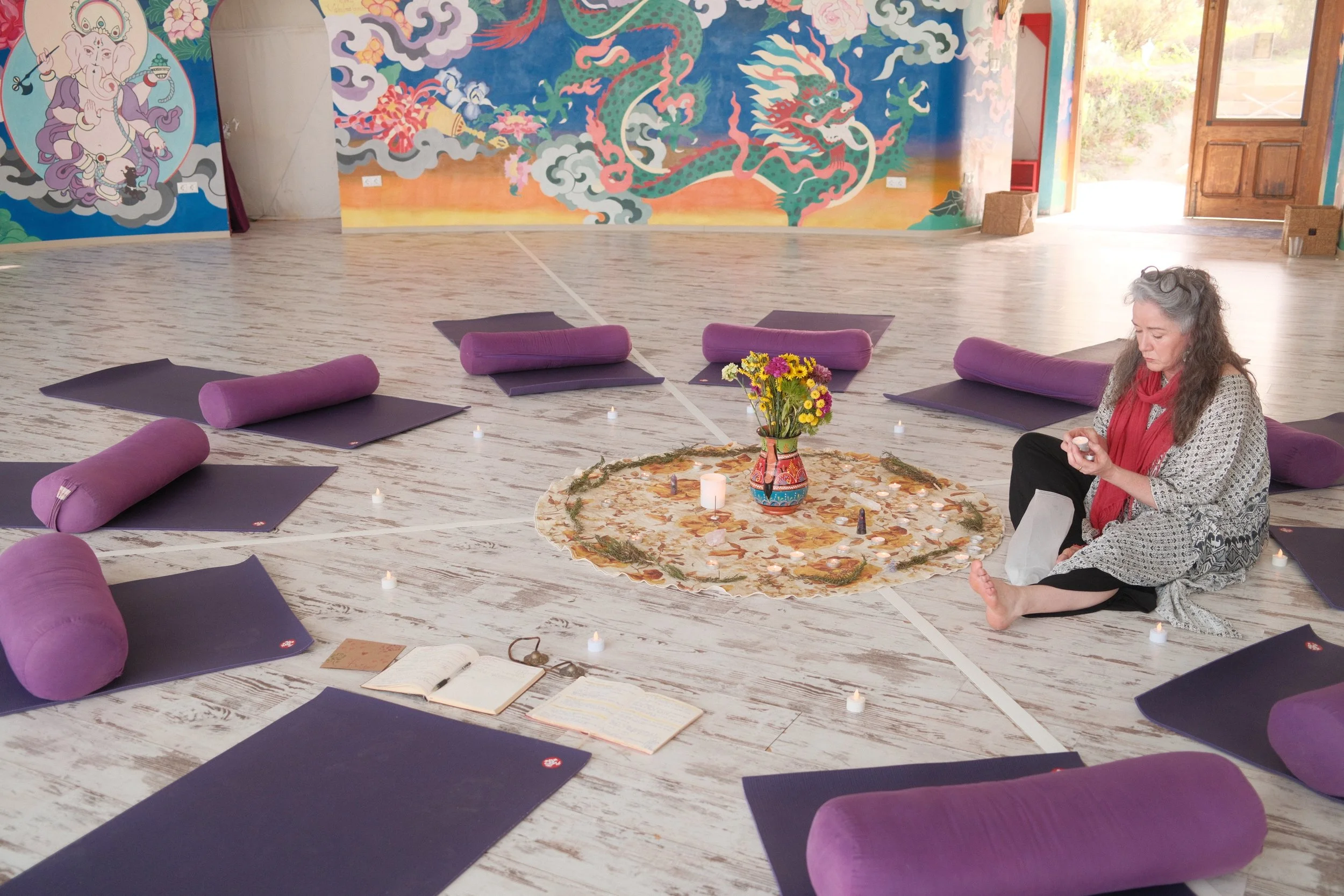
The experience of circle can deepen when it takes place within a retreat setting. Retreats naturally create a slower rhythm of life. Participants step away from daily responsibilities and enter a shared environment designed for reflection and rest. When movement practices like yoga, breathwork and meditation are combined with circle spaces, participants often feel more open and connected. The body softens, the mind slows and conversations become more meaningful. In these settings, the group often forms a small temporary community. People arrive as strangers and leave feeling deeply connected.
How circle shows up in Meala Soul retreats
Circle is an important part of the experience within Meala Soul retreats. Alongside yoga, breathwork and creative practices, we gather in circle moments throughout the retreat. These may happen at the beginning of the retreat as a way to arrive together, or later in the week as a space to reflect on what is unfolding. These circles are always gently held and completely optional. There is never pressure to share. Listening is just as welcome as speaking. Something beautiful often happens when people gather this way. Participants begin to realise they are carrying similar questions, hopes or life transitions. Over the course of the retreat, the group gradually becomes its own small community. Conversations deepen, friendships form and people support one another in unexpected ways.
Many guests say these shared moments become one of the most meaningful parts of the retreat experience.
Why women’s circles still matter today
In a world that moves quickly and often prioritises productivity over presence, spaces for honest connection are increasingly rare. Women's circles offer something different. A slower and more intentional way of being together. They remind us that healing and growth are not only individual journeys. They are also collective experiences. There is something quietly powerful about sitting together in a circle and remembering that we belong to something larger than ourselves.
If you feel curious to experience this in person, you can explore upcoming Meala Soul retreats, where yoga, breathwork, creativity and circle come together to support rest, reflection and meaningful connection.
Sources: Martino, Jessica et al. “The Connection Prescription: Using the Power of Social Interactions and the Deep Desire for Connectedness to Empower Health and Wellness.” American journal of lifestyle medicine vol. 11,6 466-475. 7 Oct. 2015) |